
A friend once told me she’d ticked the organ donor box on her ID renewal, then spent that night unable to sleep — worried she’d just signed away her place in Jannah. She’s not alone. Every year, thousands of Muslims quietly avoid registering as organ donors, not out of indifference, but out of genuine uncertainty about whether it’s even allowed. The honest answer is more nuanced — and more permission-giving — than most people realize.
Table of Contents
- Why This Question Feels So Heavy
- The Core Principle: Saving Life Comes First
- So What Do the Scholars Actually Say?
- The Conditions That Make It Permissible
- Living Donor vs. Deceased Donor — Different Rules Apply
- Where Scholars Still Disagree
- Making Your Own Decision With Confidence
Why This Question Feels So Heavy
Islam places enormous weight on the sanctity and dignity of the human body — even after death. That’s exactly why this question feels loaded: we’re taught the body isn’t fully “ours” to do with as we please, since it belongs to Allah. So the instinct to hesitate isn’t wrong. It’s actually a sign of taking the deen seriously. The question isn’t whether the body matters — it’s whether preserving another life can override that general caution.
The Core Principle: Saving Life Comes First
Surah Al-Ma’idah [5:32] establishes one of the most repeated principles in Islamic ethics: that saving a single human life carries a weight close to saving all of humanity. This single ayah underlies almost every modern fatwa on organ donation. It’s also echoed in a hadith narrated in Sahih Muslim, where the Prophet ﷺ described the believers as being like one body — when one part suffers, the whole body responds.
That image isn’t poetic decoration. Classical scholars have used it as direct reasoning for why one Muslim helping another survive illness — including through organ donation — sits well within the spirit of the Shariah.
So What Do the Scholars Actually Say?
This is genuinely a modern fiqh issue — organ transplantation didn’t exist in the time of the Sahabah (RA), so there’s no single “clear-cut” ruling from the earliest sources. Instead, major fiqh bodies convened specifically to study it:
- The Islamic Fiqh Academy of the Muslim World League (Makkah, 1985) permitted organ donation and transplantation under defined conditions.
- The International Islamic Fiqh Academy of the OIC (Jeddah, 1988) reached a similar conclusion.
- Al-Azhar’s Fatwa Committee in Egypt has stated that donating part of one’s body to save a sick person is a righteous act rewarded by Allah.
- The Fiqh Council of North America issued a formal ruling in 2018 affirming that organ donation is Islamically permissible in principle.
Not every scholar agrees on every detail, but the dominant position across mainstream fiqh councils today is: yes, it’s permitted — with real conditions attached.
The Conditions That Make It Permissible
This is the part people skip, and it matters. Scholars who permit organ donation generally require:
- No sale of organs — human organs cannot be bought or sold; this violates the dignity of the human body.
- Genuine necessity — the recipient’s life or basic health depends on the transplant; it isn’t a casual or cosmetic decision.
- Clear consent — either the donor’s own consent while alive, or their next-of-kin’s consent after death.
- No serious harm to a living donor — a living person cannot donate an organ that would endanger their own life.
- Trustworthy medical judgment — a qualified, ethical physician confirms the necessity and procedure.
One thing I’ve found genuinely useful in untangling questions like this is Online Islamic Institute’s fiqh-of-contemporary-issues sessions — a lot of these modern medical questions get covered there in a structured way, comparing what different fatwa councils have actually ruled rather than just relying on scattered opinions online.
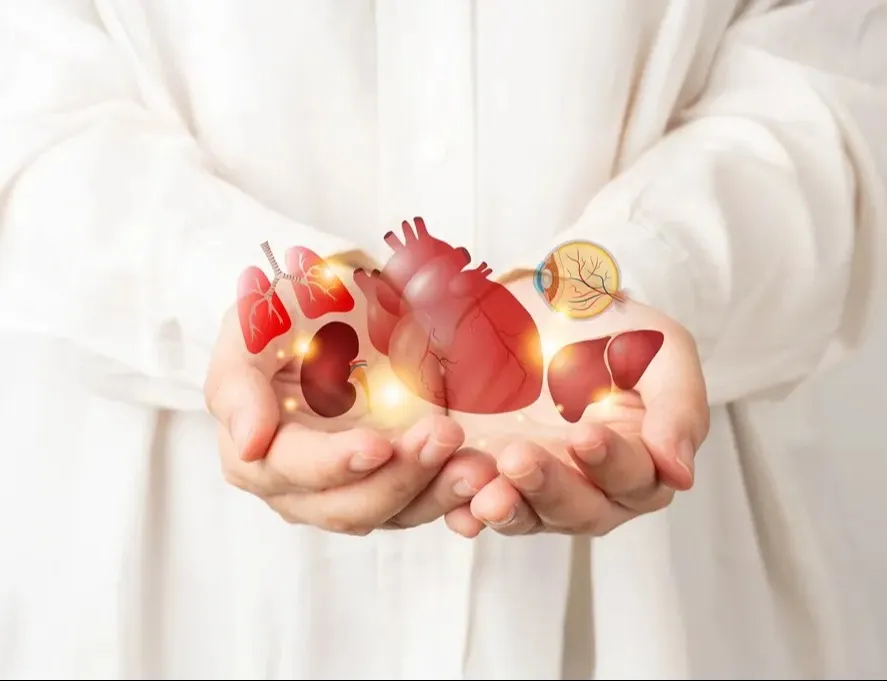
Living Donor vs. Deceased Donor — Different Rules Apply
Scholars generally treat these as two separate categories:
- Deceased donation is more widely accepted, since it doesn’t put a living person’s health at risk. It’s usually contingent on the deceased having expressed willingness beforehand, or the family’s consent.
- Living donation (like donating a kidney) is permitted by most scholars, but only when the donor’s own life and health remain protected, and the decision is made freely, without coercion or financial incentive.
There’s also broad agreement that reproductive organs (like testicles or ovaries) are excluded, due to concerns over confusing lineage — a concept Islamic law takes very seriously.
Where Scholars Still Disagree
A few areas remain genuinely contested:
- The definition of death used for deceased donation — some scholars accept brain-stem death as valid death, while others require complete cardiac and respiratory cessation, which changes the timing and viability of donation.
- Whether Muslims may donate to, or receive from, non-Muslims — most contemporary scholars say yes, since saving life isn’t restricted by faith, but this still comes up in community discussions.
- Whether organ purchase should ever be permitted under extreme scarcity — a minority view exists here, but it remains a minority.
If this is a topic you want to sit with more deeply — not just the ruling, but the reasoning scholars use to reach it — Islahi Majlis has covered similar bioethics questions in a way that actually walks through the underlying legal principles, rather than just handing down a verdict.
Making Your Own Decision With Confidence
If you’ve been putting off registering as an organ donor out of religious uncertainty, know this: the overwhelming majority of contemporary fiqh councils have already done the hard work of reasoning this through, and their conclusion leans toward permissibility, not prohibition — provided the conditions above are respected.
My friend, after actually reading the fatwas instead of guessing, re-registered the next week. Whatever you decide, let it come from clarity rather than fear. Saving a life, even after your own has ended, remains one of the few good deeds that keeps giving long after you’re gone.