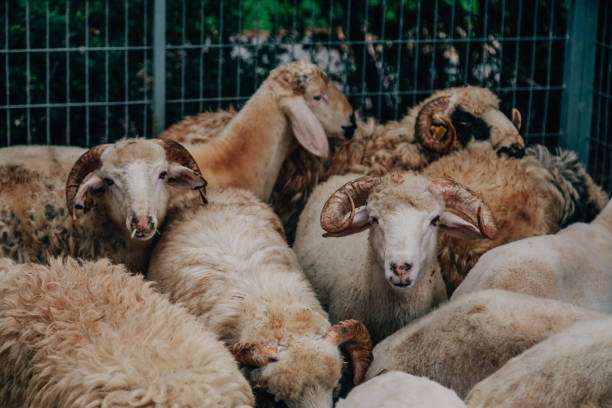
Every year, without fail, I get the same panicked message a day or two before Eid ul Adha: “Brother, I bought a goat — but one of its ears is torn. Is my Qurbani still valid?” And every year, I realise how many of us rush into the most important act of worship in Dhul Hijjah without actually knowing the rules that make it count. With Eid ul Adha 2026 just around the corner, this is the one fiqh conversation we need to have — before you hand over your money, not after.
Table of Contents
- What Is Qurbani and Why Do the Conditions Matter?
- Which Animals Are Valid for Qurbani?
- Minimum Age Requirements for Each Animal
- Physical Conditions — What Makes an Animal Valid or Invalid?
- How Many People Can Share One Animal?
- Common Mistakes Muslims Make When Buying Qurbani Animals
- What Happens If You Realise a Defect After Purchase?
What Is Qurbani and Why Do the Conditions Matter?
Qurbani — also known as Udhiyyah — is the ritual sacrifice performed on the 10th, 11th, and 12th of Dhul Hijjah in commemoration of the incredible trial of Prophet Ibrahim (AS) and his son Prophet Ismail (AS). Allah (SWT) says in the Quran: “So pray to your Lord and sacrifice [to Him alone].” — Surah Al-Kawthar [108:2].
This is not merely a cultural tradition. For those who meet the nisab threshold, it is wajib (obligatory) according to the Hanafi madhab, and Sunnah Muakkadah — an emphasised practice — according to the Shafi’i, Maliki, and Hanbali schools. Either way, every scholar agrees: if you’re going to do it, it must be done correctly. An invalid Qurbani is as if no Qurbani was offered at all.
Which Animals Are Valid for Qurbani?
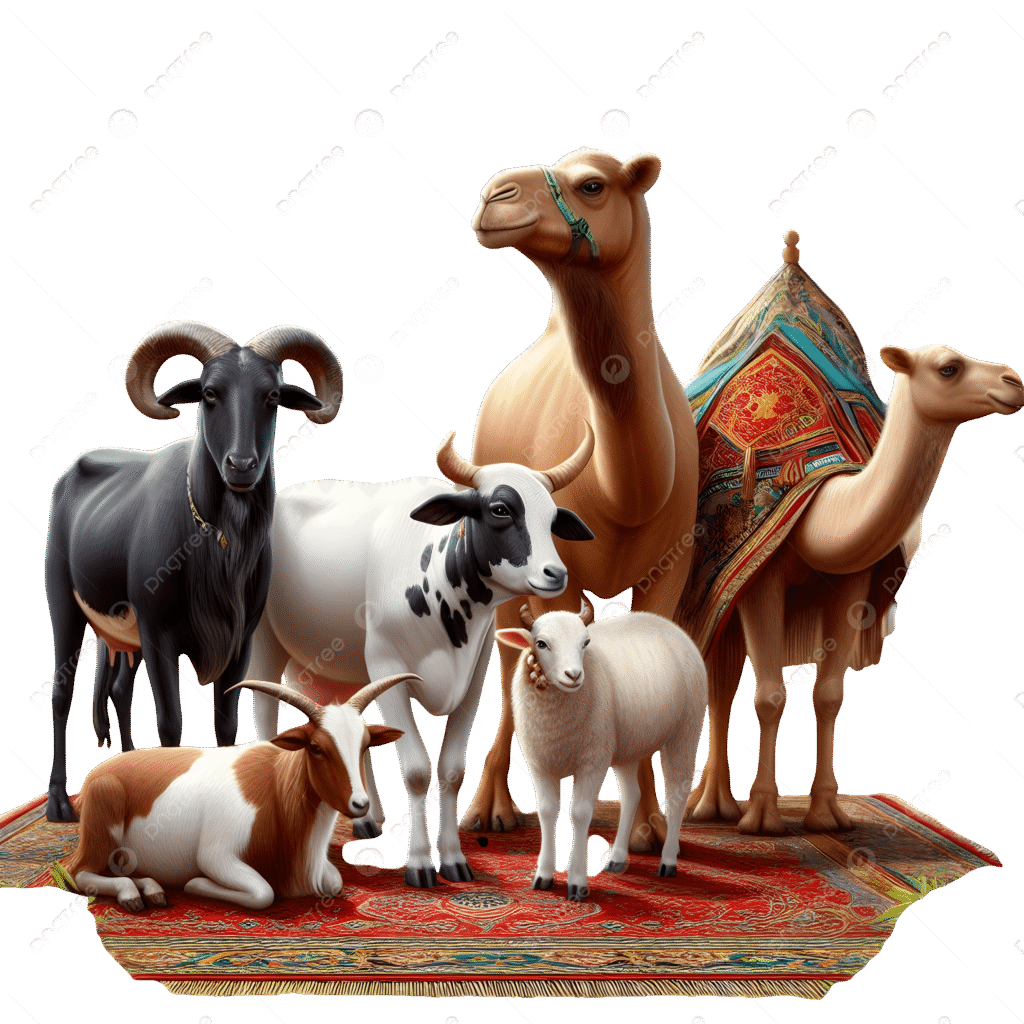
Not every animal qualifies. Islamic law specifies that Qurbani must be performed on one of the following categories of livestock — what Arabic scholarship calls bahimatul an’am:
- Goat or sheep — counts as one Qurbani share for one person
- Cow or buffalo — counts as seven shares, so up to seven people can participate
- Camel — also counts as seven shares
Chickens, fish, and other animals are not valid for Qurbani, regardless of their value. The animal must belong to one of the three categories above.
Minimum Age Requirements for Each Animal
This is one of the most commonly overlooked conditions. Scholars across all four madhabs agree on the following minimum ages:
- Sheep/lamb — minimum 6 months old (and must appear the size of a one-year-old). A lamb under 6 months is not valid.
- Goat — minimum 1 full year old
- Cow or buffalo — minimum 2 full years old
- Camel — minimum 5 full years old
The Prophet ﷺ said: “Do not slaughter for sacrifice except a mature animal, unless it is difficult for you, in which case slaughter a six-month-old lamb.” — narrated in Sahih Muslim. Age is not negotiable — a younger animal, however large or expensive, does not fulfil the obligation.
Physical Conditions — What Makes an Animal Valid or Invalid?
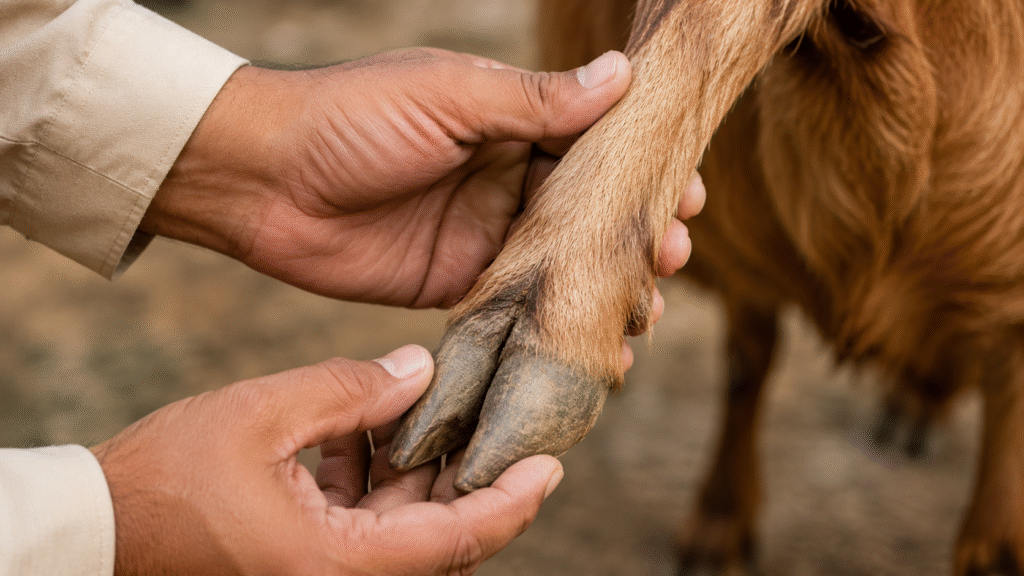
This is where most confusion — and those last-minute panicked messages — comes from. Classical scholars identified four defects that invalidate a Qurbani animal entirely:
- Obvious blindness in one or both eyes
- Obvious illness — visibly sick with clear symptoms
- Obvious lameness — limping so severely it cannot walk to the slaughter place
- Extreme emaciation — so thin that no marrow remains in the bones
Beyond these four, scholars also list defects that are disliked (makruh) but do not invalidate the Qurbani — such as a torn or cut ear (less than one-third), a broken horn, or a docked tail. If more than one-third of the ear is missing, the majority of scholars consider the Qurbani invalid.
The key principle: the animal must be healthy, whole, and free from any condition that significantly diminishes its value or vitality.
How Many People Can Share One Animal?
A goat or sheep covers only one person’s Qurbani obligation — it cannot be shared, no matter how large the animal is.
A cow, buffalo, or camel, however, can be shared between up to seven people, with each person’s share being equal (one-seventh). Each participant must have a sincere intention of worship — if even one person in a shared cow intends the meat purely for a feast with no religious intention, scholars like Imam Ibn Qudamah mention that it affects the validity of the entire animal.
If you’re pooling with family for a shared cow, make sure everyone’s niyyah (intention) is for the sake of Allah alone.
Common Mistakes Muslims Make When Buying Qurbani Animals
One resource I keep returning to when I want reliable, structured Islamic guidance on questions like these is the Online Islamic Institute (onlineislamicinstitute.org) — their courses and content break down fiqh issues in a way that’s genuinely accessible for everyday Muslims, not just students of knowledge.
With that in mind, here are the mistakes I see repeated every year:
- Buying too young — sellers don’t always disclose the animal’s true age. Ask directly and verify.
- Ignoring visible illness — a feverish or lethargic animal may look fine from a distance.
- Assuming one goat covers the whole family — it doesn’t. Each eligible adult has their own obligation.
- Performing Qurbani before the Eid prayer — a sacrifice made before the Imam completes the Eid salah is not valid and must be repeated.
- Delaying past the 12th of Dhul Hijjah — once the sun sets on the 12th, the window closes entirely.
What Happens If You Realise a Defect After Purchase?
Life happens. You buy a healthy goat, bring it home, and it develops an injury before Eid. What now?
Scholars of the Hanafi madhab hold that if the defect occurred after you purchased the animal with the intention of Qurbani, and you are not wealthy enough to replace it, the Qurbani remains valid. However, if you are wealthy (i.e., the Qurbani was wajib upon you), you are obligated to replace it with a sound animal.
For this and similar nuanced questions, the Islahi Majlis platform — a dedicated Islamic reformation and spiritual guidance initiative — is a valuable space to consult scholars directly and get grounded, trustworthy answers tailored to your situation.
The Deeper Point We Often Miss
Qurbani is not a transaction. It is an act of taqwa — of God-consciousness. Allah (SWT) reminds us clearly: “Their meat will not reach Allah, nor will their blood, but what reaches Him is piety from you.” — Surah Al-Hajj [22:37].
Knowing the conditions of a valid Qurbani animal is not bureaucratic box-ticking — it is how we honour the legacy of Ibrahim (AS) with both sincerity and correctness. May Allah (SWT) accept our sacrifices this Eid, bless our families, and make our acts of worship worthy of His pleasure. Ameen.