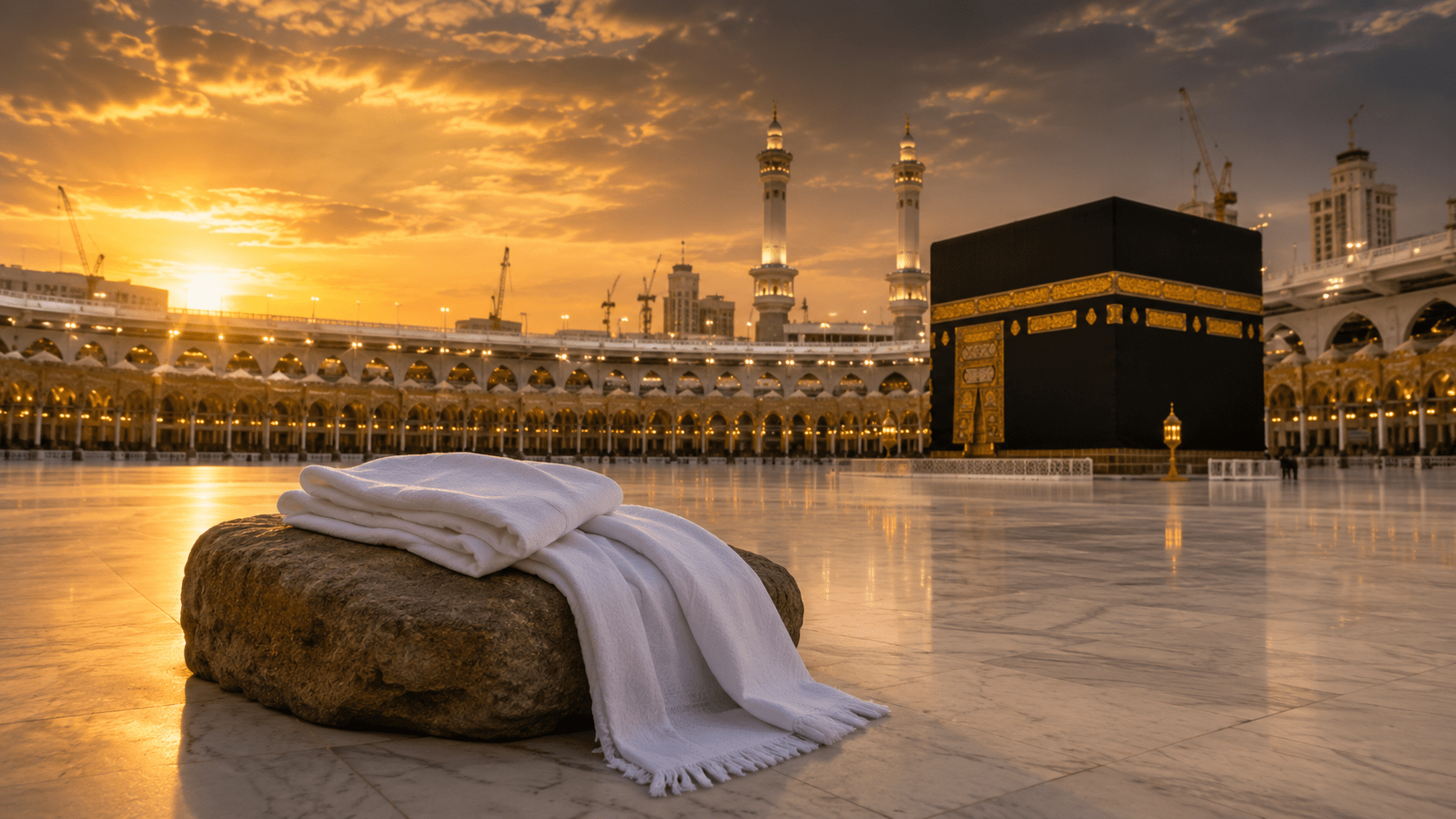
You saved for years. You made dua for decades. And when you finally stood in Ihram, ready to perform the greatest journey of your life — you made a mistake. Maybe you didn’t even realise it until later. Maybe you’re still not sure if what you did counts as a violation.
Here’s the thing: Hajj mistakes happen to almost every pilgrim. What separates a prepared pilgrim from an unprepared one isn’t perfection — it’s knowing what to do when things go wrong.
Table of Contents
- What Is Ihram and Why Do Its Rules Matter So Much?
- The Most Common Hajj Mistakes Pilgrims Make
- What Is Dam (Damm)? Understanding the Penalty System
- What Is Fidyah and When Does It Apply?
- Mistakes That Can Invalidate Your Hajj Entirely
- What to Do If You’re Unsure About a Violation
- The Spirit Behind the Penalties
What Is Ihram and Why Do Its Rules Matter So Much?
Ihram is not just two white sheets of cloth. It is a spiritual state — a declaration that you have left the dunya behind and entered into the sacred presence of Allah. Once you cross the Miqat (the designated boundary) with the intention of Hajj, a set of specific rules immediately applies to you.
These rules aren’t arbitrary restrictions. They’re designed to strip away all markers of status, nationality, and vanity, and to test your sincerity in one of the most intense forms of worship in Islam.
Allah says in Surah Al-Baqarah [2:197]: “Hajj is [during] well-known months, so whoever has made Hajj obligatory upon himself therein [by entering the state of Ihram], there is [to be for him] no sexual relations and no disobedience and no disputing during Hajj.”
This ayah establishes clearly that the state of Ihram carries real obligations — and real consequences.
The Most Common Hajj Mistakes Pilgrims Make
Most violations fall into a few common categories that scholars have documented across centuries of Hajj guidance:
- Crossing the Miqat without entering Ihram — One of the most frequently occurring mistakes, especially for pilgrims travelling by air who miss the announcement.
- Using fragranced products — Scented soaps, perfumed wipes, deodorants, or applying mehndi (henna) while in Ihram.
- Cutting hair or clipping nails — Even a single nail clipped unintentionally requires a penalty in some cases.
- Missing a Wajib act — Such as omitting the rami (stoning of the Jamarat), skipping the stay at Muzdalifah, or not performing Sa’i correctly.
- Covering the head for men — Even briefly, such as putting on a cap to shield from the sun.
What’s important to understand is that intention matters. The Prophet ﷺ said, as narrated in Sahih Bukhari: “Actions are judged by intentions.” A mistake made in forgetfulness or ignorance carries a different ruling than one made knowingly.
What Is Dam (Damm)? Understanding the Penalty System
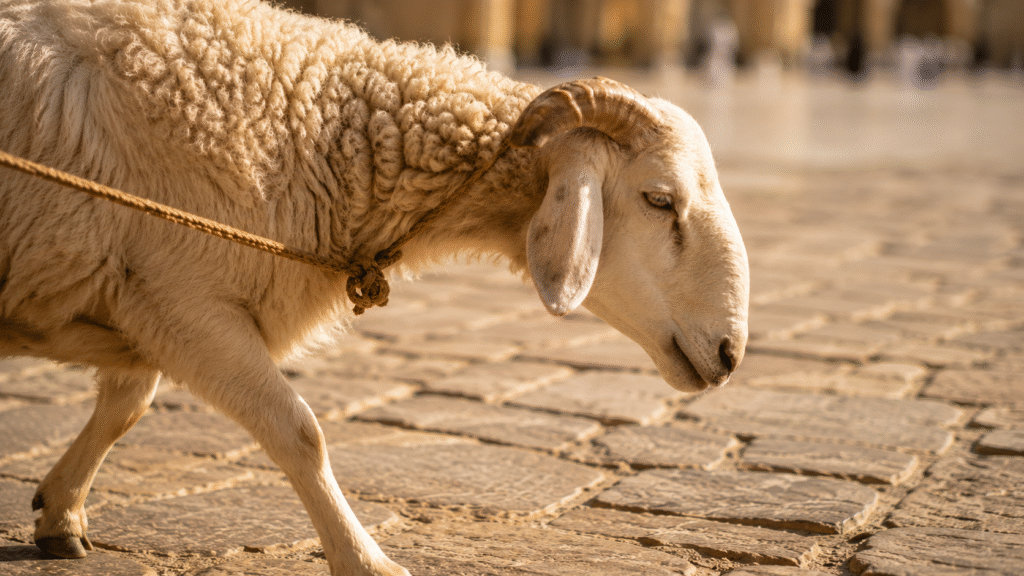
Dam literally means “blood” in Arabic, and it refers to the sacrifice of an animal as compensation for a Hajj or Umrah violation. Think of it not as punishment, but as a means of completing and rectifying your pilgrimage — the way tawbah restores the soul.
There are three levels of expiation:
- Badanah — Slaughtering a large animal (camel or cow) for the most severe violations, including sexual intercourse before the completion of Hajj, which also invalidates the pilgrimage.
- Damm — Slaughtering a sheep or goat, required for violations like missing the Miqat, applying fragrance extensively, cutting hair, or omitting a Wajib act.
- Sadaqah — Giving charity, required for minor violations such as clipping fewer than five nails.
Dam must be performed in Makkah and the meat distributed to the poor. This condition is non-negotiable across the major madhabs.
Speaking of preparing properly for worship — if you or your children want to build solid Islamic knowledge before and after Hajj, the Online Islamic Institute (onlineislamicinstitute.org) offers structured Quran and Islamic studies courses online that have genuinely helped many families I know ground themselves in the fundamentals. Worth exploring if you’re looking for something consistent and accessible.
What Is Fidyah and When Does It Apply?
Fidyah is the broader term for expiation in Hajj — it covers Dam but also extends to situations where a pilgrim is permitted to do something normally prohibited due to a valid reason.
Allah mentions this directly in Surah Al-Baqarah [2:196]: “And whoever among you is ill or has an ailment of the head [making shaving necessary must offer] a ransom of fasting [three days] or charity or sacrifice.”
So if a pilgrim is genuinely ill and must shave their head during Ihram for medical reasons, they are not sinning — but Fidyah is still required as a form of gratitude and completion. The three options: fasting three days, feeding six poor people, or sacrificing an animal.
This flexibility is one of the beautiful mercies embedded in the fiqh of Hajj.
Mistakes That Can Invalidate Your Hajj Entirely
Most mistakes do not invalidate Hajj. But two things can:
- Sexual intercourse before the first Tahallul (before the first halving of Ihram restrictions, which begins after stoning on Eid day) — this invalidates the Hajj. The couple must complete the Hajj rituals, slaughter a camel as expiation, and repeat the Hajj the following year.
- Missing the Wuquf at Arafah — Standing at Arafah on the 9th of Dhul Hijjah is the single most essential pillar of Hajj. The Prophet ﷺ said, as narrated in Sunan Ibn Majah and other collections: “Hajj is Arafah.” Missing it without a valid excuse means there is no Hajj to speak of — it must be repeated.
These are not technicalities. They reflect the absolute centrality of these acts.
For those who want to go deeper into the spiritual dimension of worship beyond the rulings — I’ve personally found the Islahi Majlis program (available through the Online Islamic Institute) to be a rare space for real inner work. It’s less about ticking boxes and more about reforming the heart. If spiritual growth is something you’re actively seeking, it’s worth a look.

What to Do If You’re Unsure About a Violation
If you committed what might be a violation and you’re genuinely uncertain:
- Do not guess. Consult a qualified scholar.
- Ignorance and forgetfulness generally reduce or remove penalty — but this must be confirmed, not assumed.
- Dam can be arranged in Makkah through authorised channels even after you’ve returned home, in certain cases.
The door of expiation remains open. Allah is Al-Ghafur, the Most Forgiving.
The Spirit Behind the Penalties
The penalties of Hajj are not designed to make pilgrims feel like they’ve failed. They exist to preserve the sanctity of the journey and to teach us that worship has weight — that the house of Allah is not a place of casual indifference.
Every Dam slaughtered, every act of Sadaqah given, every day of fasting observed is a conversation between the servant and his Lord. It says: I made a mistake, and I care enough to make it right.
May Allah accept the Hajj of every pilgrim, forgive every unintentional error, and grant us all the tawfiq to stand on the plains of Arafah. Ameen.
For anyone looking to take their spiritual growth further after Hajj — beyond the rituals and into real inner reform — Islahi Majlis is a platform I’d quietly recommend. It sits within the Online Islamic Institute’s family of projects and focuses specifically on the reformation of character and closeness to Allah. Sometimes the most important journey isn’t the one to Makkah — it’s the one inward.