
Your child is six. Old enough to sit still for a few minutes, curious about everything, and — if you’re reading this — you’re wondering how to make the Quran a natural part of their life. Not a chore. Not something they dread. But something they grow up loving.
The good news: six is a beautiful age to begin. The challenge is knowing where to start and how to keep it going.
Table of Contents
- Why Six Is a Golden Age for Quran Learning
- Start With the Alphabet, Not the Mushaf
- Make It a Routine, Not a Lesson
- What to Teach — and in What Order
- How to Keep a 6-Year-Old Engaged
- When to Consider a Qualified Quran Teacher
1. Why Six Is a Golden Age for Quran Learning
At six, a child’s memory is remarkably sharp. Scholars throughout Islamic history have noted that what is learned in childhood sticks far longer than what is learned later in life. The Prophet ﷺ guided that children should be directed toward prayer by age seven — meaning the years just before are the ideal time to lay the groundwork.
This isn’t about pressure. It’s about planting seeds during the season when they take root most easily.
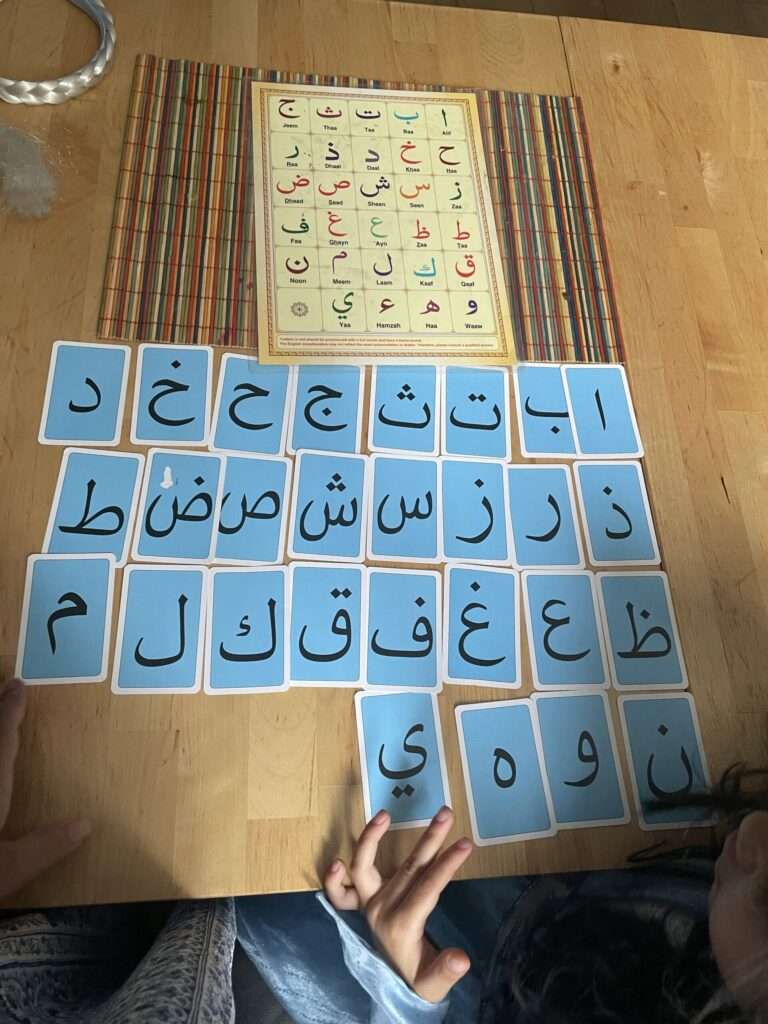
2. Start With the Arabic Alphabet, Not the Mushaf
Many parents make the mistake of opening the Quran on day one. Before a child can read the Quran, they need to recognise Arabic letters and understand how they connect and sound.
Begin with:
- Learning the Arabic alphabet (Alif to Ya)
- Recognising letters in isolation and then in joined form
- Basic Tajweed sounds — how each letter is pronounced correctly
A good Qa’idah (primer) like the Noorani Qa’idah or Baghdadi Qa’idah is specifically designed for this stage. 15–20 minutes a day is enough.
3. Make It a Routine, Not a Lesson
Six-year-olds thrive on rhythm. If Quran time happens at the same point every day — right after Fajr, just before bed, or after Asr — it becomes part of life rather than an interruption.
Keep sessions short: 10 to 20 minutes is ideal for this age. End before they get bored. That way, they come back willingly tomorrow.
A few habits that help:
- Begin and end with a short dua
- Let them hold the book or point to letters themselves
- Praise effort, not just performance
4. What to Teach — and in What Order
A clear, age-appropriate progression works best:
- Arabic alphabet — recognition and pronunciation
- Qa’idah — letter combinations, vowel sounds, tanween
- Short surahs — Al-Fatiha, Al-Ikhlas, Al-Falaq, An-Nas (from memory first, then reading)
- Basic Tajweed rules — introduced gradually, not all at once
- Slow recitation practice — reading short passages with correct pronunciation
Don’t rush. A child who learns 5 letters well is ahead of one who has rushed through 50.
5. How to Keep a 6-Year-Old Engaged
Repetition is essential in Quran learning — but it can feel monotonous. A few things that genuinely work:
- Listen together: Play recitation by a clear, slow qari and listen with your child before they repeat. Hearing it correctly is the first step.
- Reward small milestones: Completing a Qa’idah page, memorising a new surah — acknowledge it. Children thrive on recognition.
- Let them teach back: After a lesson, ask your child to “teach” you what they learned. It cements retention powerfully.
- Connect surahs to meaning: Even at six, a child can understand that Al-Ikhlas says Allah is One and He has no partners. Simple meaning makes memorisation feel purposeful.
6. When to Consider a Qualified Quran Teacher
There is a limit to what parents — however dedicated — can teach at home, especially if their own Tajweed needs work. Incorrect pronunciation, if left uncorrected, becomes a habit that is very hard to fix later.
A qualified teacher does more than correct mistakes. They create accountability, structure, and a child-friendly pace that is hard to maintain alone at home. Many parents find that even two or three sessions a week with a proper teacher makes a dramatic difference.
If regular local classes aren’t an option, online Quran learning for kids has become genuinely effective. Online Islamic Institute (onlineislamicinstitute.org) offers structured Quran classes for young beginners, taught by qualified teachers in a one-on-one online format. Classes are available for students both inside India and internationally — at flexible timings that work around your child’s school schedule. They even offer a free demo class so you can see how your child responds before committing.
Also Worth Reading
If you’re thinking about when to start, there’s a helpful post on this exact question that many parents find reassuring before beginning:
https://onlineislamicinstitute.org/best-age-start-quran-learning/
Starting Quran learning at six is one of the most meaningful gifts you can give your child. You don’t need to be a scholar to begin — you just need consistency, patience, and the willingness to show up daily. Set a routine, get the right materials, and if needed, bring in a qualified teacher to guide the pronunciation correctly from the start. The foundation you build now will carry your child for the rest of their life.