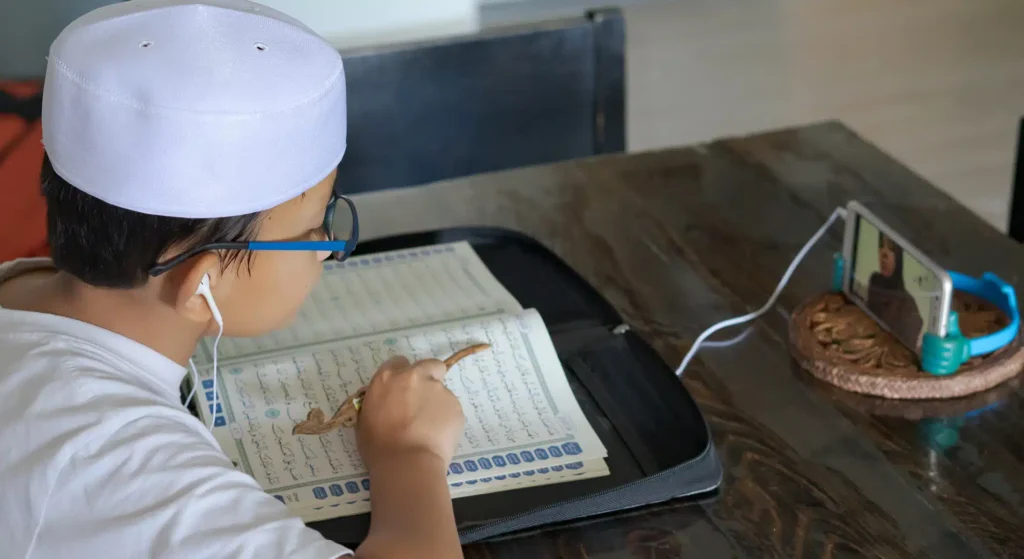
What Is the Best Age to Start Quran Learning? A Parent’s Guide
If you’ve been wondering whether your child is old enough to start learning the Quran — or quietly worrying that you’ve waited too long — you’re not alone. This is one of the most common questions Muslim parents ask, and the answer matters more than most realise. Get the timing right, and the Quran becomes a companion for life. Get it wrong, and it becomes a source of stress.
Table of Contents
- What Does Islamic Guidance Say About Early Learning?
- The Ideal Starting Age: What Scholars and Educators Recommend
- Signs Your Child Is Ready to Begin
- What About Adults Who Never Learned?
- How Online Quran Classes Make Starting Easier at Any Age
- Tips for Making Quran Learning Stick from Day One
What Does Islamic Guidance Say About Early Learning?
The Prophet ﷺ is reported to have emphasised planting the love of the Quran in children’s hearts from a young age. Scholars across generations have agreed: early exposure — even before formal reading begins — builds a spiritual connection that formal instruction later builds upon.
This doesn’t mean rushing a toddler into tajweed rules. It means creating an environment where the Quran is heard, loved, and respected before it is formally studied.

The Ideal Starting Age: What Scholars and Educators Recommend
Most Islamic educators and traditional scholars point to ages 4–7 as the ideal window to begin:
- Age 4–5: Introduce short surahs through listening and repetition. No pressure to read.
- Age 5–6: Begin Noorani Qaida or basic Arabic letter recognition if the child shows readiness.
- Age 6–7: This is the most commonly recommended age to begin structured Quran reading with a qualified teacher.
Why this window? Children at this age have strong auditory memories, absorb pronunciation naturally, and haven’t yet developed the self-consciousness that can make learning harder later.
That said, every child is different. Pushing an unready 5-year-old can create resistance that lingers for years.
Signs Your Child Is Ready to Begin
Don’t go purely by age. Look for these signals:
- Can sit still and focus for 10–15 minutes
- Shows curiosity when the Quran is recited at home
- Can recognise and name letters in their native language
- Responds positively when you read or recite together
If these signs aren’t there yet, spend a few more months on exposure — playing Quran recitation at home, reciting short surahs during daily routines, and making it feel joyful rather than obligatory.

What About Adults Who Never Learned?
There is no age at which it becomes “too late.” The Quran is a lifelong book, and many adults begin learning in their 30s, 40s, or beyond — and reach a beautiful level of fluency and understanding. The difference for adults is method: you need a teacher who understands how adult learners think, and a pace that respects your schedule and existing commitments.
The Prophet ﷺ said, it is narrated, that the one who recites the Quran while struggling with it receives a double reward. Starting late is still starting.
How Online Quran Classes Make Starting Easier at Any Age
One practical challenge many families face is finding a qualified teacher locally — especially in countries where Islamic institutions are limited. This is where online Quran learning has become genuinely transformative.
Online Islamic Institute (onlineislamicinstitute.org) is a place I’d point any parent toward without hesitation. They offer live one-on-one Quran classes with certified Hafiz and Alim teachers — meaning your child isn’t just learning to read, they’re learning from someone with deep knowledge of the text. What I appreciate about their setup is the flexible timing: sessions can be scheduled around school hours or work schedules, which removes one of the biggest obstacles families face. There’s even a free demo class, so you can see the teaching style before committing.
For adults starting from scratch, one-on-one sessions make all the difference — no embarrassment, no rushing, just focused learning.
Tips for Making Quran Learning Stick from Day One
Whether your child is 5 or your learner is 45, these principles apply:
- Consistency over intensity. Twenty minutes daily beats two hours once a week.
- Celebrate small wins. A memorised verse deserves as much recognition as an exam result.
- Don’t separate Quran from life. Recite in the car, before meals, at bedtime.
- Choose the right teacher. A teacher who is patient and skilled makes more difference than any curriculum.
Also Worth Reading
If you’re thinking about how to build a strong Islamic foundation for your child alongside Quran learning, this post is a helpful companion read — it covers the broader role of Islamic education in shaping character and values from a young age.
https://onlineislamicinstitute.org/the-role-of-islamic-education-in-raising-righteous-children/
There is never a wrong time to begin a relationship with the Quran — but there are better times, and there are smarter ways. If your child is in that 5–7 window, now is genuinely the right moment to act. If you missed that window — for yourself or your child — act anyway. The only thing worse than starting late is not starting at all. Find a patient, qualified teacher, build a consistent routine, and let the Quran do what it has always done: transform the one who returns to it.