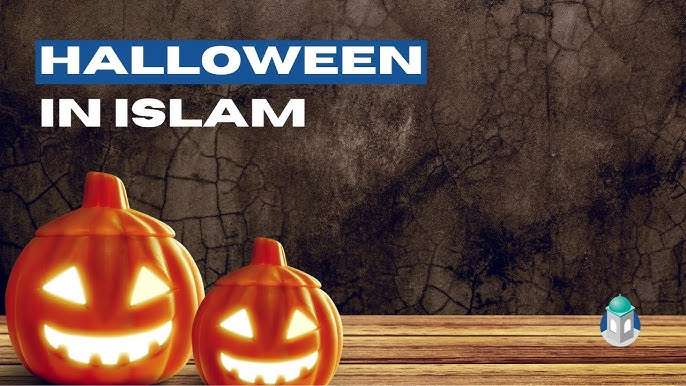
Every year, at the end of October, many around the world celebrate Halloween with costumes, spooky decorations, and “trick or treating.” For children, it might seem like harmless fun — dressing up, collecting candies, and enjoying parties.
But as Muslims, it’s important for us to ask:
What is Halloween really about?
Should we participate in it?
And what does Islam say about taking part in such celebrations?
Let’s understand this clearly — in light of the Qur’an, Sunnah, and Islamic principles, insha’Allah. 🌿
The Origins of Halloween
Before we decide whether Halloween is suitable for Muslims, we should know where it came from.
Halloween has pagan roots — it originated from the ancient Celtic festival called Samhain, when people believed that spirits and ghosts would visit the earth at the end of October. They would light bonfires and wear costumes to “scare away” evil spirits.
Later, when Christianity spread in Europe, the Church tried to adapt this pagan festival and named it “All Hallows’ Eve”, the night before “All Saints’ Day.” Over time, it became known as Halloween.
So, at its core, Halloween is not an Islamic tradition, nor is it a cultural celebration with neutral meaning — it’s rooted in superstition, fear, and pagan rituals.
What Islam Teaches About Such Celebrations
In Islam, our guidance for celebrations comes from the Qur’an and the Sunnah of the Prophet Muhammad ﷺ.
The Prophet ﷺ said:
“Every people has its festival, and this is our festival.”
(Sahih al-Bukhari)
This means that Muslims have their own special days — like Eid al-Fitr and Eid al-Adha — and should not imitate the festivals of other religions or cultures, especially those linked to shirk (polytheism) or false beliefs.
Allah reminds us in the Qur’an:
“And do not follow the ways of those who do not know.”
(Surah Al-Jathiya 45:18)
Participating in Halloween — even just for fun — can blur the line between Islamic identity and non-Islamic customs. It can make our children feel that it’s okay to imitate celebrations that contradict Islamic values.
Why Muslims Should Avoid Halloween
Even though Halloween may seem like “just fun,” there are several reasons Muslims should avoid it:
It’s based on pagan beliefs.
Halloween originated from rituals meant to please spirits and ward off ghosts — beliefs that contradict tawheed (the Oneness of Allah).It promotes fear, darkness, and superstition.
Islam teaches us to seek refuge in Allah from evil, not to play with it or make it entertaining.It encourages imitation of non-Islamic traditions.
The Prophet ﷺ said:“Whoever imitates a people is one of them.”
(Abu Dawood)It distracts from good deeds and remembrance of Allah.
Instead of spending time in worship, dhikr, or learning, people spend it on costumes, horror themes, and material activities.It can normalize haram things — such as scary costumes, music, and mixed gatherings — all of which move hearts away from the remembrance of Allah.
What Can Muslim Families Do Instead?
Alhamdulillah, Islam gives us better alternatives — full of light, joy, and reward!
Here’s how Muslim families can stay true to their deen while still engaging children positively:
1. Teach children the meaning of Tawheed
Remind them that we believe only in Allah, not in ghosts, monsters, or superstitions. Allah protects us — no spirit or evil can harm us except by His will.
2. Host a “Family Night of Dhikr and Treats”
Instead of trick-or-treating, make your own “Halal Treat Night.” Read Qur’an together, share hadith stories, and give your kids sweets as a gift for remembering Allah.
3. Learn the Islamic history of courage and faith
Talk about the bravery of the Prophets (AS) and Sahabah (RA), not fictional monsters. Teach that true courage is standing firm in faith and resisting wrong.
4. Teach kindness all year
Children don’t need Halloween to share sweets or joy. Teach them to give gifts, share food, and spread smiles regularly — for the sake of Allah, not as part of a non-Islamic custom.
How to Respond Politely
If someone wishes you a “Happy Halloween” or offers Halloween candy, you can respond kindly but clearly:
“Thank you, but we don’t celebrate Halloween. I hope you have a good day!”
This keeps your manners gentle while showing that your family follows Islamic principles.
In Summary
Halloween has pagan and non-Islamic origins.
It contradicts the teachings of Tawheed and the Sunnah.
Muslims are encouraged to avoid it completely, not even for fun.
Instead, we should focus on Islamic alternatives that promote gratitude, kindness, and remembrance of Allah.
Teaching children their Muslim identity proudly will make them strong and confident in their faith, insha’Allah.
Learn More About Islamic Guidance for Families
Want to raise your children with strong Islamic values and authentic understanding?
Explore Online Islamic Institute — a platform that provides authentic Islamic courses for all ages, focusing on Qur’an, manners, and faith in daily life.
👉 Visit: onlineislamicinstitute.org
May Allah protect our families from every form of misguidance, strengthen our love for the Sunnah, and fill our homes with light, peace, and remembrance of Him.
Ameen. 🤍
JazakAllahu Khairan and Assalamu Alaikum wa Rahmatullahi wa Barakatuh.