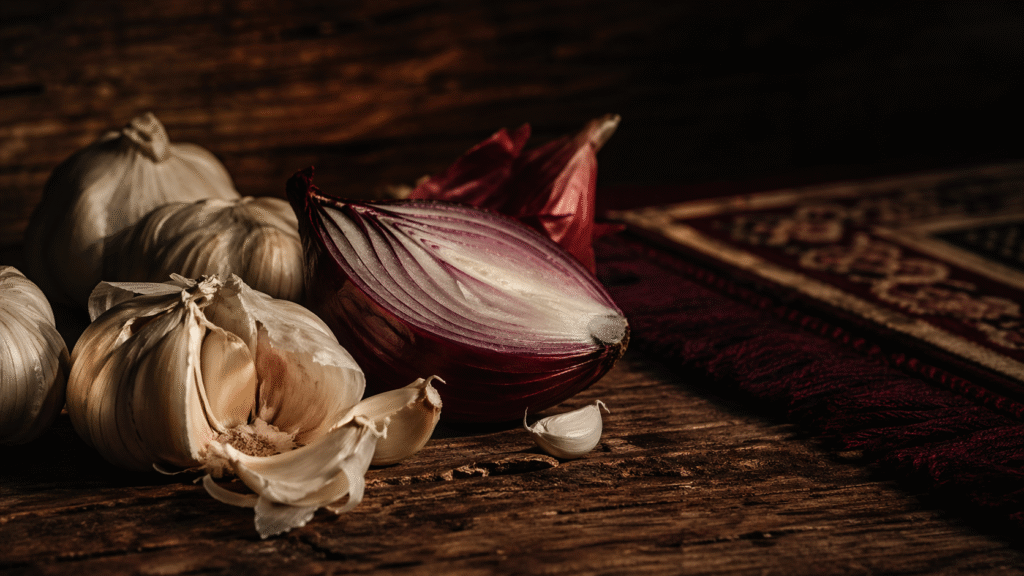
There’s a moment many of us know well. You’ve just had a meal with raw onion in the salad or garlic bread on the side, and someone reminds you — “You can’t go to the masjid like that.” You half-laugh, half-wonder: is this actually an Islamic ruling, or just cultural habit passed down through families? It turns out, the Prophet ﷺ addressed this directly. And the answer is more nuanced — and more interesting — than most people realise.
Table of Contents
- What Did the Prophet ﷺ Actually Say?
- Is It Haram or Just Discouraged?
- Which Foods Are Included in This Ruling?
- When Is It Completely Fine to Eat Them?
- What Scholars Say About the Wisdom Behind It
- Practical Guidance for Modern Muslims
What Did the Prophet ﷺ Actually Say?
This isn’t a ruling invented by scholars centuries later. It comes directly from authenticated hadith. The Prophet ﷺ said, “Whoever has eaten garlic or onion, let him keep away from our masjid,” narrated in Sahih Muslim. In another narration, he ﷺ was brought a pot containing garlic and, upon smelling it, declined to eat from it — though he did not forbid others from doing so.
This is about proximity to a sacred space and consideration for fellow worshippers — not about the food itself being sinful.

Is It Haram or Just Discouraged?
This is where people often get confused, so let’s be clear.
Eating raw garlic and onion is not haram. It is makruh (disliked/discouraged) only in specific circumstances — primarily when you intend to attend congregational prayer at the masjid.
- The food itself: halal, without question
- Eating it before going to the masjid: makruh
- Eating it at home with no intention of attending the masjid: permissible
The distinction matters. Islam does not make wholesome food forbidden. The concern is entirely about the communal, spiritual environment of the masjid.
Which Foods Are Included in This Ruling?
The hadith mentions garlic and onion specifically, but scholars extend the ruling to any food that produces a strong, offensive odour from the mouth, including:
- Leeks
- Spring onions
- Raw radishes
- Certain fermented foods with a pungent smell
Imam An-Nawawi and other classical scholars agreed that the effective cause (‘illah) is the offensive smell — not the specific vegetable. So the ruling applies wherever that cause is present.
When Is It Completely Fine to Eat Them?
The short answer: most of the time.
Garlic and onion — cooked — lose most of their offensive odour and are entirely unrestricted. The Prophet ﷺ himself reportedly enjoyed certain cooked dishes that included these ingredients.
You are also unaffected by this ruling if:
- You are not attending the masjid that day
- You are ill and unable to attend congregational prayer
- You are eating them cooked, not raw
- You are in a situation of necessity, such as medical need
This is one of the beautiful examples of how Islamic jurisprudence balances individual freedom with communal responsibility.
What Scholars Say About the Wisdom Behind It
Why does this ruling exist at all? Scholars highlight several layers of wisdom:
Respect for the masjid. The masjid is the house of Allah. Angels are present during prayer. Causing discomfort to fellow worshippers — or to the angels — through a preventable odour is considered a form of disrespect to the sanctity of that space.
Consideration for others. In congregational prayer, you are standing shoulder to shoulder with your brothers and sisters. The Prophet ﷺ was intensely aware of communal comfort. This ruling is essentially a fiqh of consideration — a legal expression of caring about the people around you.
It is not punitive. The Prophet ﷺ never shamed those who ate these foods. He simply asked them to be mindful of the space they were entering.
If you’re looking to go deeper into rulings like this — the kind that sit at the intersection of daily life and Islamic ethics — the Online Islamic Institute (onlineislamicinstitute.org) offers structured courses that make classical fiqh genuinely accessible. It’s the kind of learning that turns confusing half-answers into confident understanding.
Practical Guidance for Modern Muslims
Here’s what this actually looks like in daily life:
- Cooking with garlic and onion? No issue at all — carry on.
- Had a raw onion salad at lunch and Jumu’ah is in two hours? Either avoid the raw onion or brush thoroughly, use a mouth rinse, and if the smell persists, consider praying at home for that salah.
- Medical need for raw garlic (it’s widely used as a natural remedy)? Scholars generally permit necessity-based exceptions.
- Working in food service? Use your judgement — the ruling is about the masjid specifically, not public spaces generally.
For questions about rulings that touch your specific situation, Islahi Majlis is a trusted platform offering Islamic guidance and spiritual counsel — particularly useful when you need a scholar’s perspective on real-life scenarios.
The next time someone jokes about garlic bread before Jumu’ah, you’ll know — it’s not a cultural myth. It’s a ruling rooted in genuine prophetic wisdom, centred on love for the masjid, care for fellow worshippers, and the beauty of a religion that thought through even the smallest details of communal life. May Allah make our masajid places of ease, welcome, and the sweetest of gatherings. آمين